
How Do Porta Potties Work On A Construction Site?
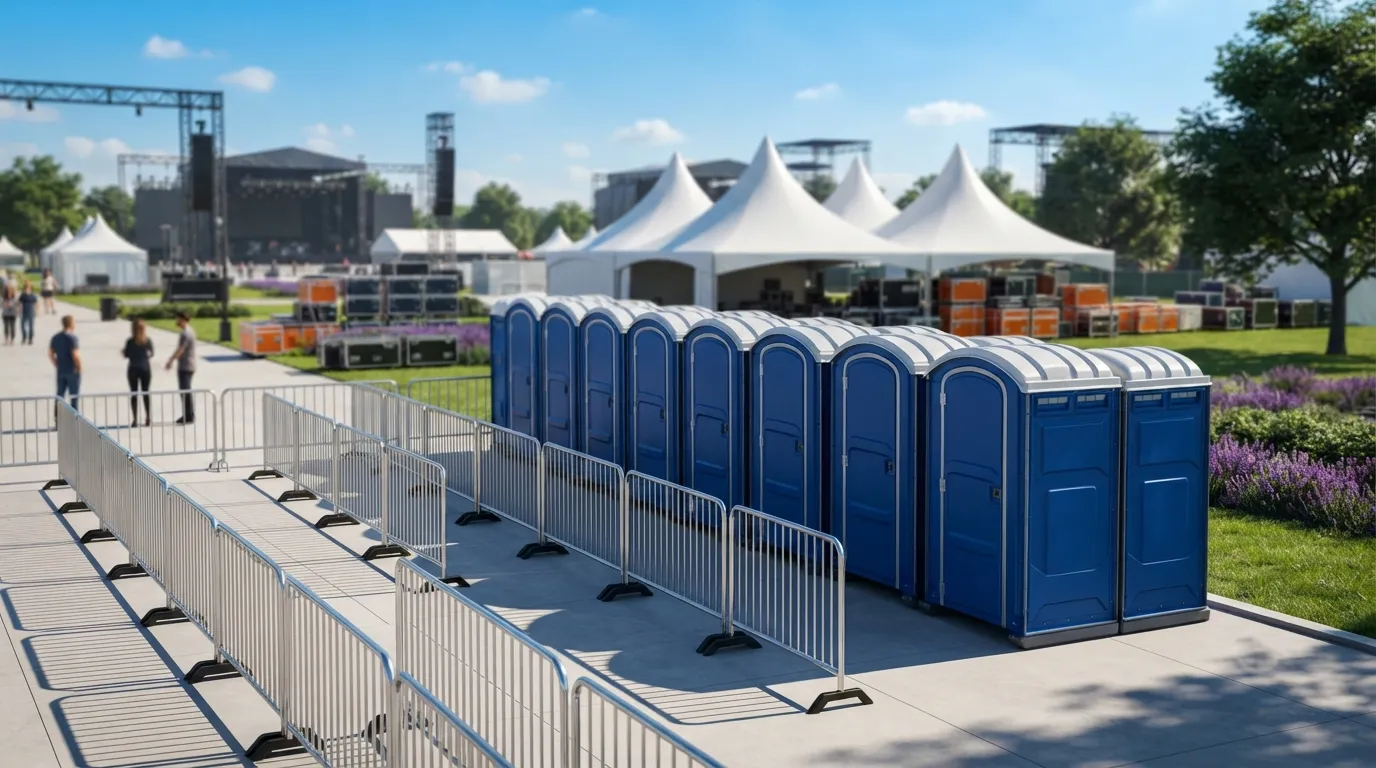
A construction worker running to a porta potty between tasks doesn't think about what's underneath the seat, but the setup matters for the whole crew. Construction site services in Modesto place standard porta potty rental units where OSHA 1926.51(c) sets the ratio: one toilet for 20 workers or fewer, then one seat and one urinal per 40 workers beyond that, up to 200. The tank sits sealed under a non-flushing bowl. Waste and the blue chemical mix inside, and a vent stack pulls odor up and out through a filtered pipe. Units stand about 92 inches tall and measure roughly 44 by 48 inches on the ground, small enough to fit tight staging areas near Modesto job sites. A service truck comes on a route, usually weekly per ANSI/PSAI Z4.3 for a 40 hour week at moderate use, and pumps the tank through a hose without opening the unit. For jobs running heavier crews or longer hours, porta potty rental per day pricing lets a foreman scale up fast. If you're not sure how many units a crew needs, how many porta potties do i need walks through the headcount math, and OSHA portable toilet requirements covers the full ratio table.
How Do Flushable Porta Potties Work?
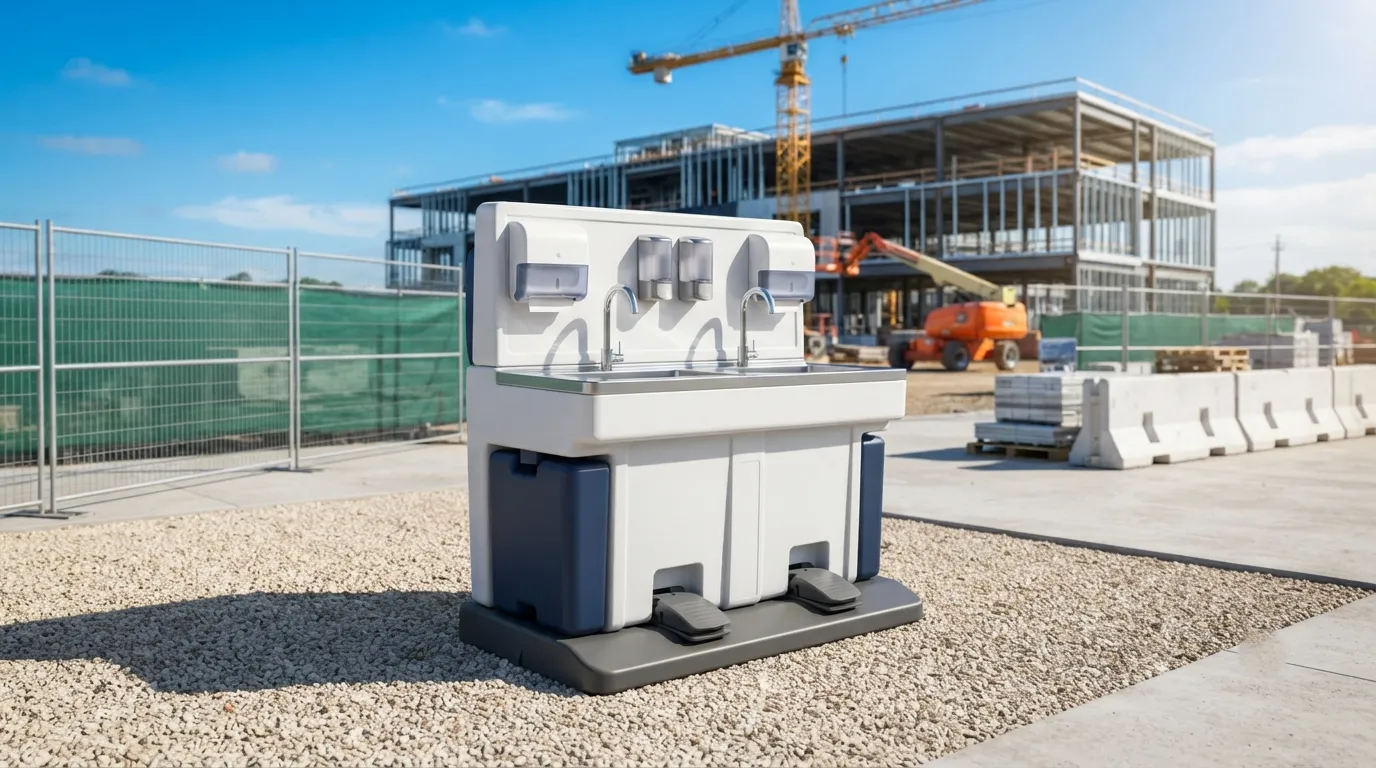
A flushable unit uses a small onboard freshwater tank and a hand pump or foot pedal to rinse the bowl after each use, pushing waste into a separate holding tank below. That's the difference between a deluxe flushable porta potty and a standard chemical unit: fresh water in, waste held separately, less odor buildup over a weekend event. Deluxe units often include a small sink too, which works like a scaled-down version of a standalone portable sink rental: a foot pump or hand crank pulls water from a fresh tank through a spout, and greywater drains into a holding tank underneath rather than the ground. For anyone asking how does a portable sink work at a food booth or job trailer, that's the mechanism, no plumbing hookup needed. Restroom trailers take it further. A restroom trailer rental connects to real flush toilets and running sinks, often with AC and lighting, built for weddings and longer events where guests expect a real bathroom. See 2 stall restroom trailer and 4 stall restroom trailer options for guest counts under 150.
How Do Camping Porta Potties Work?
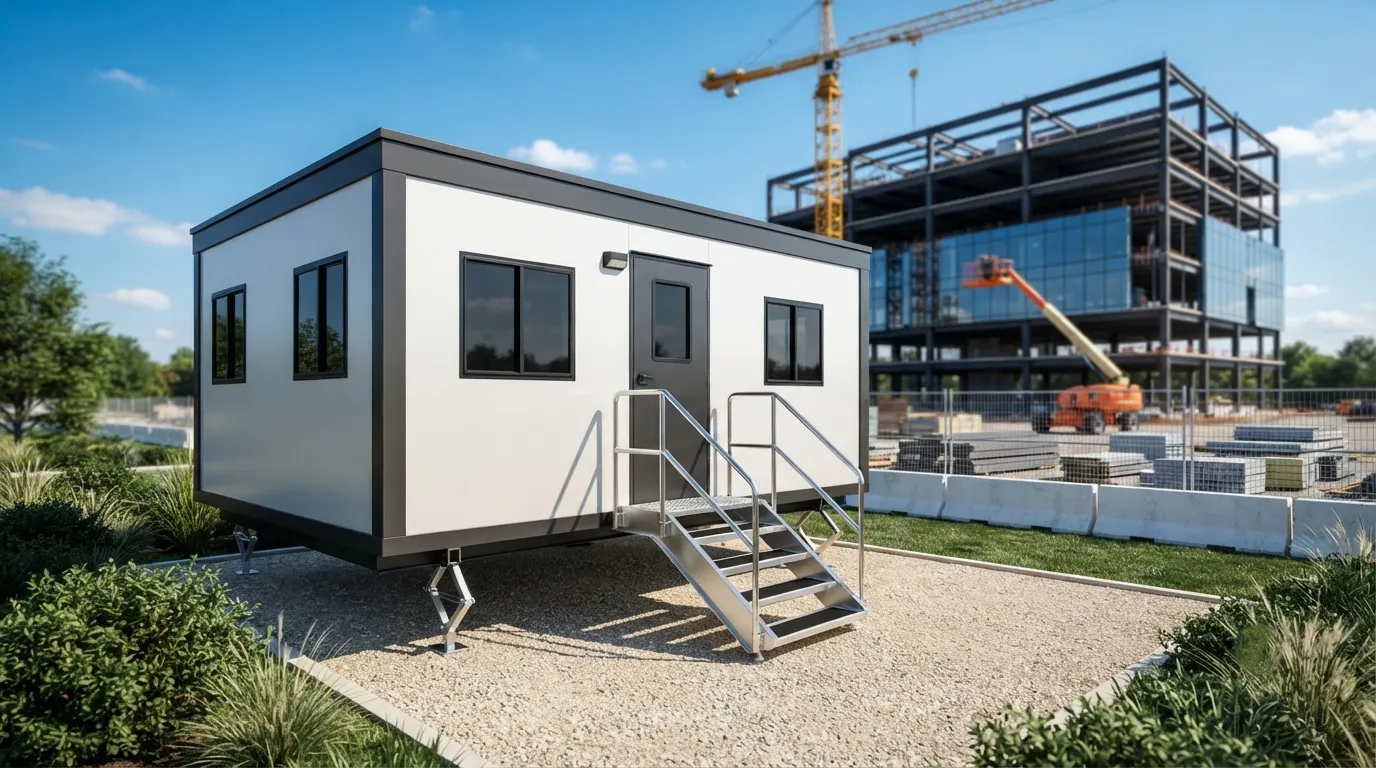
Camping and small backyard events use the same chemical-tank principle as a jobsite unit, just scaled down and often self-contained for one or two users at a time. A camping porta potty from Modesto Porta Pros holds waste in a sealed base tank, mixed with deodorizer, and gets swapped or pumped after the trip rather than serviced mid-week. For weekend outings near Modesto, a short rental window keeps cost down, and weekend rates on a standard unit run in the low hundreds depending on delivery distance. If the event is bigger than a family trip, like a festival restroom rental or county fair restrooms booking, unit count scales with expected attendance rather than a fixed crew size. Event restroom rental planning covers that math for anything from a backyard party to a multi-day fairground event. ADA Standards section 213.2 requires that at least 5 percent of clustered single-user units be accessible, never fewer than one, which matters even for smaller gatherings. ADA accessible porta potty units meet that with a 60 inch turning circle per ADA Standards 304.3.1 and a 32 inch minimum door opening under ADA Standards 404.2.3.
Why Does A Septic Tank Need Cleaning Chemicals?
A septic tank cleaning chemical isn't the same product as porta potty deodorizer, and the two systems don't overlap much beyond both handling waste breakdown. A residential septic tank, typically pumped every 3 to 5 years depending on tank size and household size, relies on bacteria to digest solids between pumpings, not a chemical additive. Searching portable toilet chemicals near me usually turns up the blue tank deodorizer used in rental units, a different product built to control odor and start breakdown in a small sealed tank rather than treat a buried 1,000 gallon system. Septic pumping service in Modesto handles the actual pump-out with a vacuum truck, and septic tank warning signs explains what tells you a tank is due early. Grease interceptors follow a different rule entirely: they need pumping once fats, oils, grease and solids reach 25 percent of the liquid depth, covered on grease trap pumping. For sites without sewer access at all, a holding tank rental skips the tank-and-drainfield setup entirely and gets pumped on a schedule like a porta potty.
Do porta potties smell?
Not when serviced on schedule. The sealed tank and blue chemical control odor between pump-outs, and a vent stack carries gas up and away from the seat. Heavy use without regular service is what causes smell. See do porta potties smell for what affects odor most.
How often are porta potties cleaned?
Weekly is standard for moderate use under ANSI/PSAI Z4.3, covering up to 10 users over a 40 hour week. Busier sites or events need more frequent service. How often are porta potties cleaned breaks down the schedule by use case.
What does a porta potty rental cost in Modesto?
A standard unit runs in the low hundreds for a single day and scales down per day on longer rentals. Porta potty rental cost has the full pricing breakdown by duration and unit type.
Can I rent a porta potty for just one day?
Yes. Day rentals exist for one-off jobs, deliveries, and small gatherings. Porta potty rental per day covers pricing and what's included with a single-day drop.
Are portable toilets required on construction sites?
Yes, under OSHA 1926.51(c), based on crew size. OSHA portable toilet requirements lays out the exact ratios and how they apply to jobsites around Modesto, Rouse, and Ceres.
Next step
Get a delivery date
Tell us the address, the dates and the headcount. We size the order and confirm the route.